
(AI Enhances, Not Replaces Humans — Series)
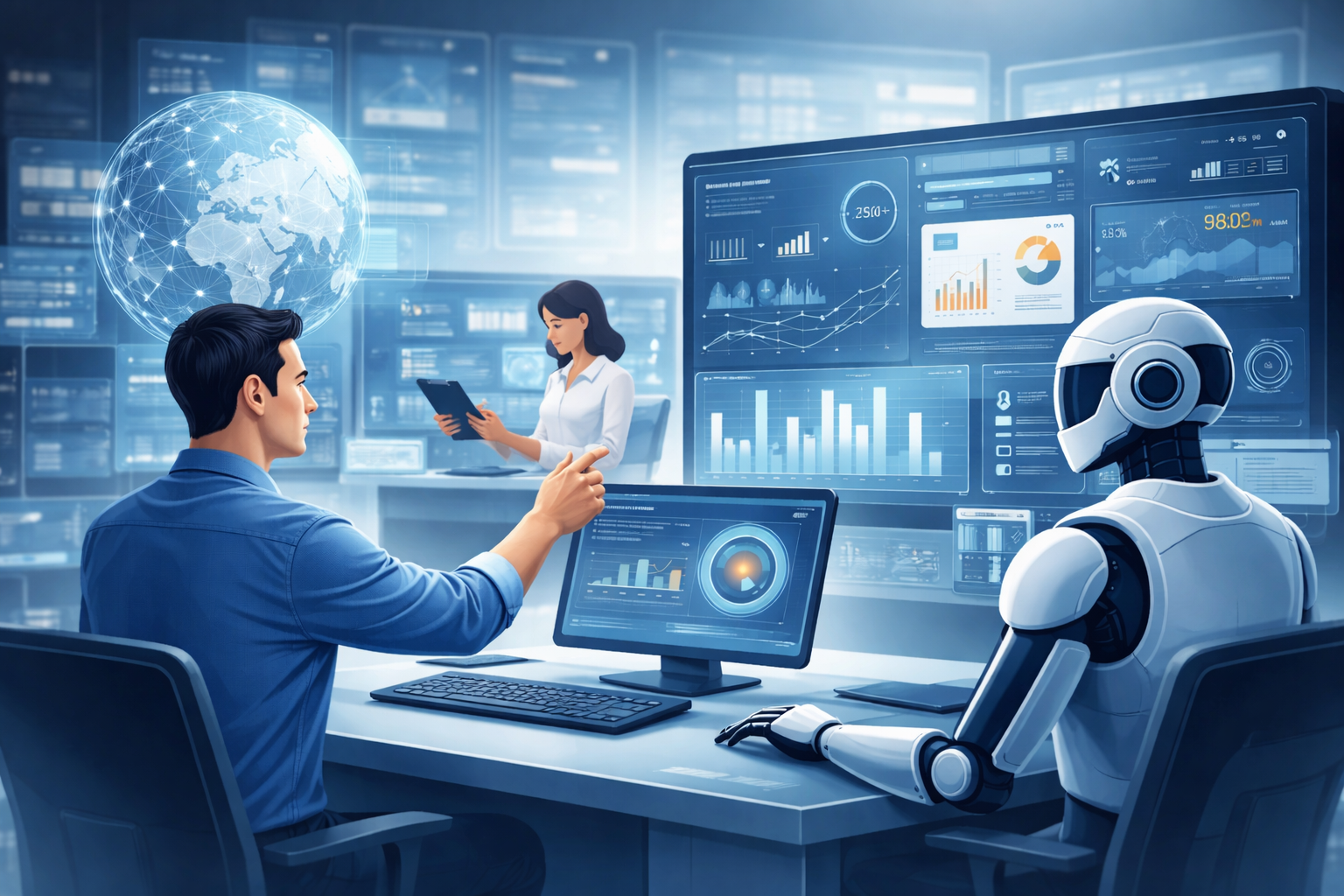
Artificial Intelligence is rapidly moving beyond experimental tools into the core of everyday business operations. From supply chains and marketing to IT infrastructure, organizations are embedding AI directly into their workflows. But the most successful implementations follow a simple principle: AI enhances human capabilities rather than replacing them.
Instead of fully autonomous systems, modern enterprises are building human + machine workflows, where AI handles speed and scale while humans guide decisions, strategy, and oversight. This model is quickly becoming the foundation of practical AI adoption across industries.
The Shift: From Automation to Collaboration
Traditional automation focused on eliminating manual work. The goal was efficiency through rigid systems that performed repetitive tasks.
Today’s AI systems are different. They are designed to collaborate with humans, not simply automate processes.
In modern workflows:
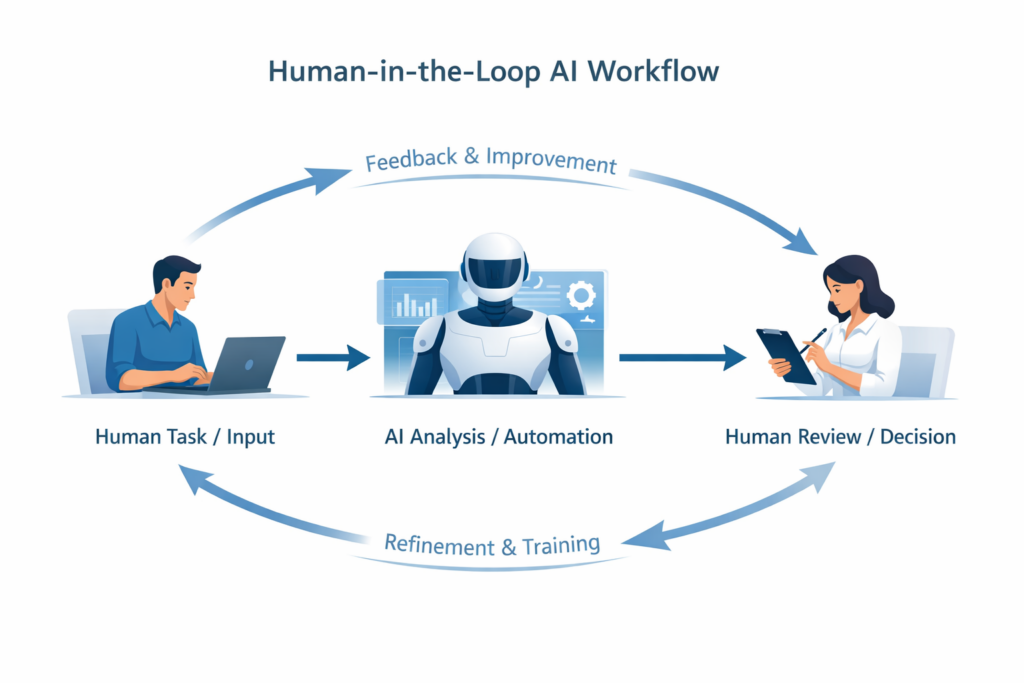
- AI analyzes large datasets within seconds
- AI generates recommendations, predictions, or draft outputs
- Humans review, refine, and approve the final decisions
This model is commonly called Human-in-the-Loop (HITL). It ensures AI remains accurate, responsible, and aligned with real business needs.
Rather than replacing employees, AI becomes a digital assistant that accelerates productivity.
Why AI Still Needs Humans in Operations
Even with powerful generative AI models and automation platforms, real-world operations are unpredictable. AI can process information quickly, but it lacks context, empathy, and business intuition.
Humans remain essential because they provide:
- Context awareness – understanding business goals and customer needs
- Ethical oversight – ensuring responsible AI use
- Creative problem solving – handling unexpected situations
- Strategic thinking – making decisions beyond data patterns
Recent developments in enterprise AI platforms show a growing trend: organizations are treating AI as a collaborative digital coworker rather than a replacement for employees.
The goal is not fewer humans in the workflow—it is smarter workflows powered by AI assistance.
Real-World Examples of Human + Machine Workflows
Across industries, businesses are adopting hybrid workflows that combine AI automation with human expertise.
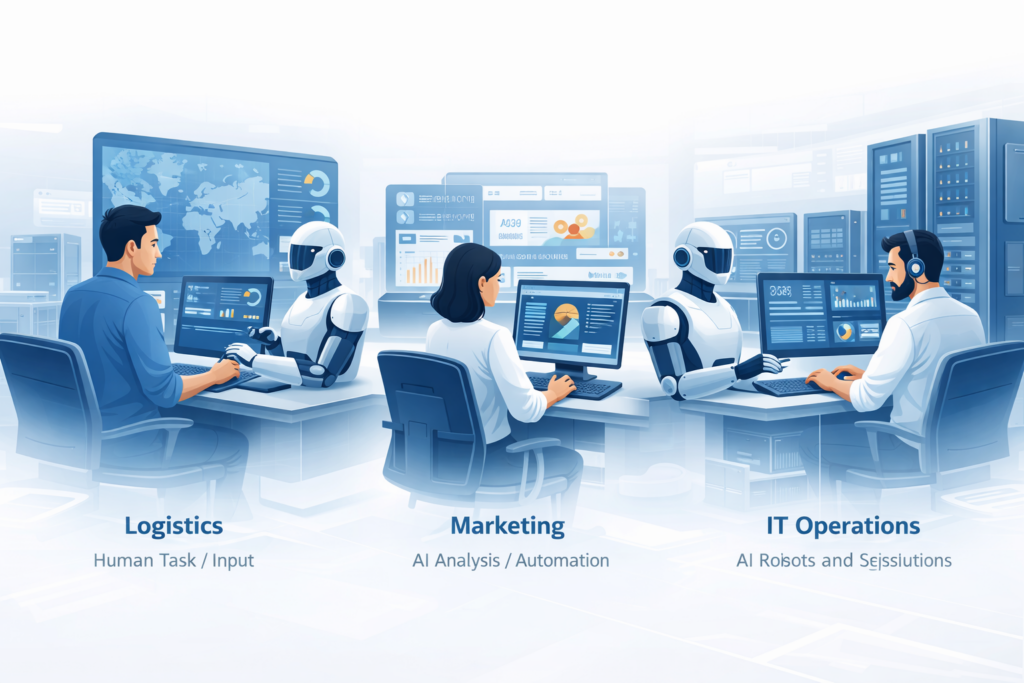
1. Logistics and Supply Chain
AI systems now analyze shipping data, forecast demand, and optimize delivery routes in real time. Operations teams review these insights and make adjustments when conditions change.
This reduces delays while keeping humans in control of critical decisions.
2. Marketing and Content Operations
AI tools help marketing teams generate campaign drafts, analyze audience trends, and suggest messaging improvements. Marketers guide prompts, edit content, and ensure brand consistency.
The result is faster content production without sacrificing creativity.
3. IT Operations and DevOps
AI-powered monitoring systems track infrastructure performance, detect anomalies, and recommend fixes. Engineers investigate complex issues and approve corrective actions.
Instead of replacing technical teams, AI reduces repetitive troubleshooting and improves response times.
Designing Effective Human-AI Workflows
For organizations adopting AI in operations, the design of workflows matters as much as the technology itself.
Some key principles include:
1. AI for Speed, Humans for Judgment
AI processes data quickly, but humans validate decisions and provide context.
2. Continuous Feedback
Human input improves AI systems over time, making them more accurate and reliable.
3. Transparency and Trust
Employees need visibility into how AI recommendations are generated.
4. Workforce Upskilling
Training employees to collaborate with AI tools ensures successful adoption.
The Future of AI-Driven Operations
The next generation of AI systems will not operate independently. Instead, they will function as intelligent collaborators embedded into daily workflows.
AI will handle large-scale analysis, monitoring, and automation. Humans will guide direction, interpret results, and make strategic decisions.
Organizations that design strong human + machine workflows will gain a significant advantage: faster operations, smarter insights, and teams empowered by AI technology.
In the evolving world of work, the most powerful systems will not be purely human or purely machine – they will be a combination of both.